Architectural Glass Innovation at Huong Nghiem Dhamma Hall – Glass Mandala
Bùi Chí Công
20 Aug 2026
•
5 minute read
GLASS MANDALA AT HUONG NGHIEM DHAMMA HALL: BRIDGING ARCHITECTURE, LIGHT, AND CONSCIOUSNESS
The glass Mandala complex at Huong Nghiem Dhamma Hall stands as a clear testament to how mastering material technology and structural engineering can elevate Buddhist art.
Beyond its deep spiritual value, this work represents a proud milestone in architectural glass engineering in Vietnam.
1. THE AXIS OF LIGHT AND IMPERMANENCE
For thousands of years, Buddhist Mandalas have manifested through Thangka paintings or impermanent sand art. At Huong Nghiem Dhamma Hall, a new dialogue in spiritual art unfolds: the Glass Mandala. Glass ceases to be merely a protective barrier; it becomes a material that shapes and conducts light.
Axis Mundi (Cosmic Axis): Natural light passes through the crystal sphere, the glass tiers of the Glass Stupa, and the entire upper structure, then continues to illuminate the center of the 36 square meter Huong Nghiem Mandala within the Dhamma Hall.
Material of Light: Transparency, light transmission, reflection, and refraction allow glass to do more than just form architecture. As natural light shifts throughout the day, the appearance of the structure continuously transforms.
Certificate of Commendation from the Sangha: At Huong Nghiem Dhamma Hall – Huong Pagoda, this glass art complex is not merely an architectural highlight, but also represents a unique harmony between Vajrayana philosophy and specialized glass craftsmanship. The project was honored with a Certificate of Commendation from the Vietnam Buddhist Sangha for its pioneering, breakthrough innovations.
2. THREE-DIMENSIONAL COSMIC MODEL
The 13 layers Stupa in slumped glass
Technical & Artistic Highlights:
Slumped Glass Technology: Standing over 8 tall,the Glass Stupa utilizes heat-formed slumped glass instead of conventional flat glass surfaces. Relief patterns and curved surfaces add visual depth, softening light scatter as it travels through the structure.
432 Embossed Buddha Light Images: The 13 tiers of the stupa feature a total of 432 Buddha Light images—108 images per side. When illuminated, these embossed reliefs catch light from multiple angles, creating the illusion of figures emerging from the glass block itself.
Buddha Eye Focal Point: The Buddha Eyes set against a gold-plated stainless steel background establish a strong visual anchor at the base of the stupa. This design creates a striking contrast between the solid metallic surface and the transparent glass structure above.
3. THE UNDIVIDED COSMIC VISION
Vitrified Enamel Glass Technology
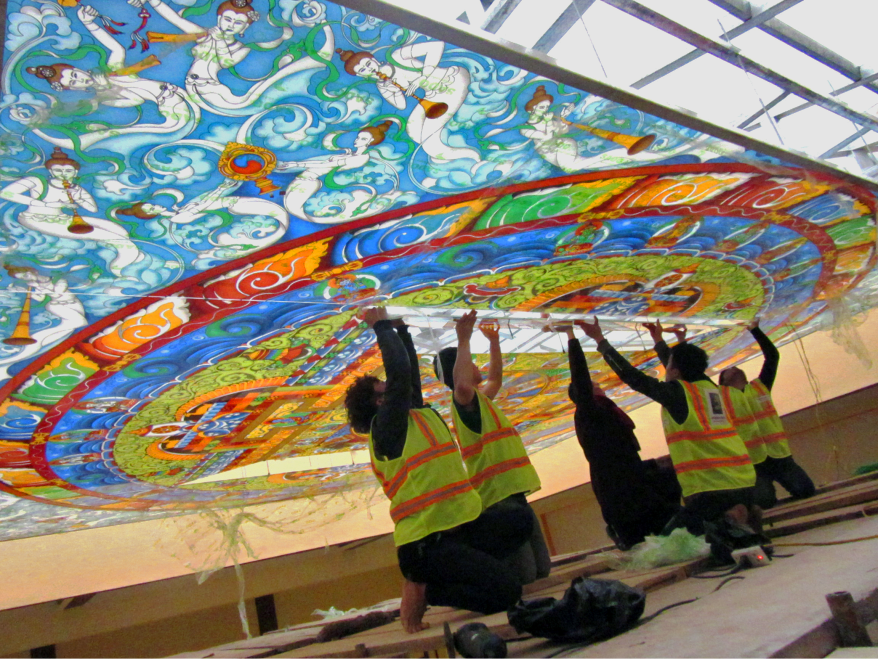
The 2D Mandala, measuring created using vitreous enamel painting fired at high temperatures. The vibrant shades characteristic of Thangka art—depicting Buddhas, Apsaras, and intricate patterns—are permanently locked inside the glass structure. This technique ensures absolute transparency under backlighting, while guaranteeing eternal durability against humidity and temperature fluctuations.
Key Features:
A Seamless Image: The Mandala is assembled from 13 large glass panels. Natural light from the structure above continues to illuminate the artwork within the meditation space, connecting both Mandalas along a single axis.
Engineering Breakthrough: The core value of the artwork lies in a unique hidden-frame glass suspension solution independently researched and developed by the artist. This innovation completely eliminates the harsh visual presence of load-bearing structures, allowing the Mandala to appear as a seamless, unified, and graceful plane of color.
A MASTERPIECE OF LIGHT, TECHNIQUE, AND DHARMA
The Glass Mandala at Huong Nghiem Dhamma Hall is far more than an ambitious technical feat in architectural glass is a physical manifestation of sacred geometry and spiritual unity. By seamlessly blending advanced glass-forming technologies with the eternal wisdom of Vajrayana Buddhism, this project transcends traditional art forms. It stands as a timeless beacon where architecture, light, and consciousness converge, offering visitors an immersive experience of undivided wholeness and profound peace.